
What Age Can Kids Start Ballroom and Latin Dance?
Many children start around age 5. At that age, the goal is not perfect steps. It is learning to hear the beat, stand tall, move with a partner and enjoy the music. Children who can follow a short instruction and copy a teacher’s movement are usually ready for a beginner class. Starting later works well too. Older beginners often learn footwork faster because they have better balance and focus. Grand Educational Center’s founder, Dr. Varduhi Aleksanyan, began Latin and Ballroom training at age 11 and went on to become a 7-time Champion of the Republic of Armenia. A later start did not hold her back, and a later start is no barrier for many children who enjoy the work.
What Is the Difference Between Ballroom and Latin Dance?
Ballroom and Latin are two families of partner dance. Ballroom dances, such as the Waltz and Tango, are smooth and upright, with long, flowing steps. Latin dances, such as the Cha-Cha, Samba, Rumba, Paso Doble and Jive, are faster and more rhythmic, with lively hip and foot action. Most children try both. Many young dancers love the energy of Latin first, while the Waltz teaches calm control and posture. At Grand Stage, the repertoire includes Cha-Cha, Samba, Rumba, Paso Doble, Tango, Jive and Waltz, plus a Kids Latin class for the youngest dancers. Trying several styles helps a child find what they enjoy, and enjoyment is what keeps them coming back.
What Do Children Learn in a Beginner Dance Class?
A first class is mostly about the body and the music. Children learn to stand tall with relaxed shoulders, count the music and step on the beat. They practice simple basic steps, balance on one foot, and turn without losing their place. Over the first months, they add partner work: holding a frame, leading and following, and staying in time with someone else. Partner dancing asks children to listen, cooperate and be patient with another person. Better posture and more confidence often show up in everyday life, not only on the dance floor. Progress is gradual, and the teacher’s job is to keep it joyful while building good habits from the start. Short practice at home helps too: putting on music and counting the basic step together for five minutes is enough.
How Are Kids’ Dance Classes Grouped by Age?
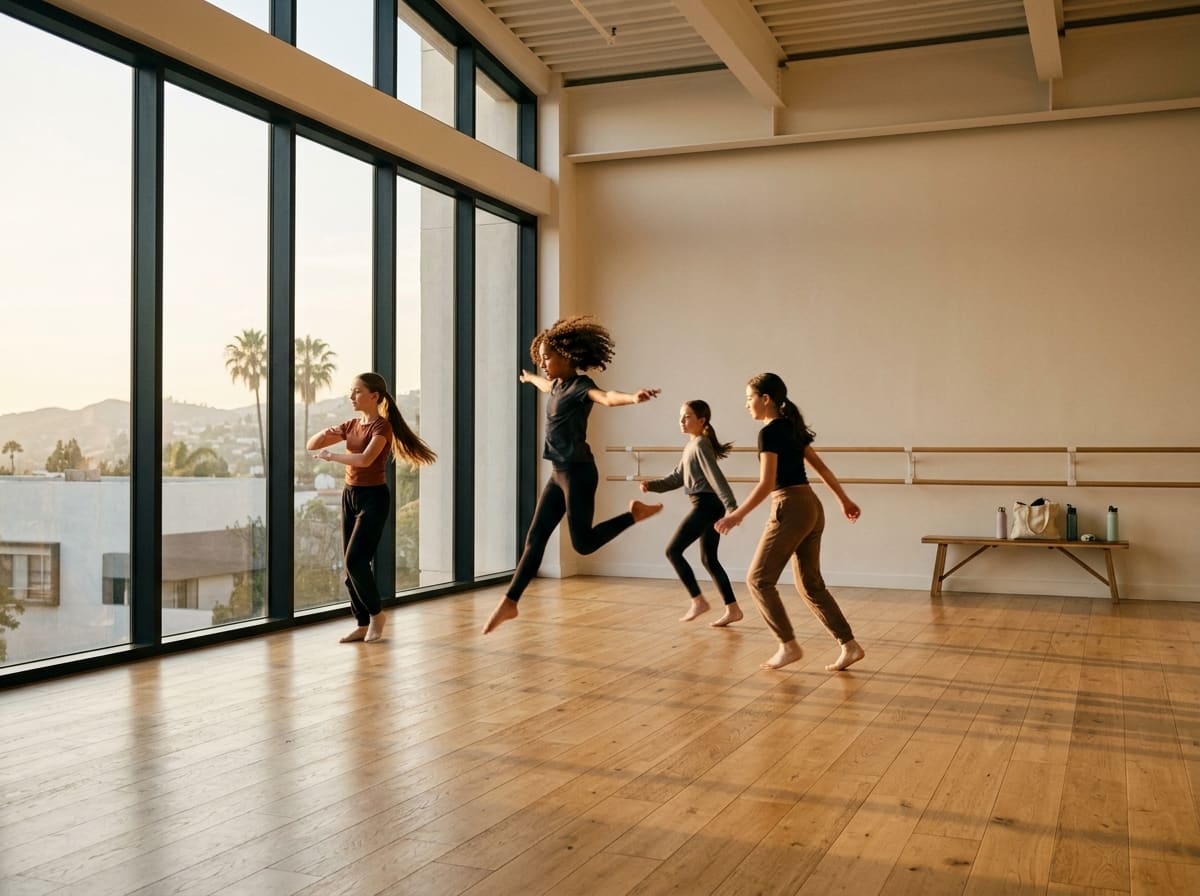
Grouping by age matters in dance. A 5-year-old and a 12-year-old need different music, different explanations and different goals. At Grand Educational Center, ballroom and Latin classes are organized into three age groups: ages 5–7, ages 8–11, and ages 12 and up. The youngest group focuses on rhythm, posture and joyful musicality, including Kids Latin. The middle group builds structured Latin and Ballroom technique and works in ensemble formations. Older and more experienced students move on to more advanced choreography. Classes run Monday through Friday between 4:30 PM and 10:00 PM in Rooms L and M, on a sprung hardwood floor built to absorb shock. If your child sits on the border between two groups, ask during a visit which one fits better.
What Should My Child Wear to Dance Class?
For the first few lessons, keep it simple. Comfortable clothes that let your child move, like leggings or fitted pants and a T-shirt, work well. Long hair should be tied back so it stays off the face during turns. Avoid sneakers with heavy grip, since they make turning hard; clean, flat shoes or socks are often fine for a trial class. Ballroom and Latin dancers eventually wear dance shoes with suede soles, which slide and grip just enough for turns. Before buying any shoes or practice wear, ask the teacher what your child’s age group needs. Young feet grow fast, so there is no need to buy everything at once. Bring a water bottle to every class, and label shoes and clothes, since many children wear similar practice wear.
Where Can Kids Take Ballroom and Latin Dance in Glendale?
Grand Stage Ballroom & Latin Dance is part of Grand Educational Center at 725 E Broadway, Glendale, CA 91205. The program is directed by founder Dr. Varduhi Aleksanyan, who holds a PhD in Pedagogy and is a World Dance Council International Judge. Classes are 60 minutes long and run on weekday afternoons and evenings. Because the center also offers after-school homework help, children in Grades K–7 can finish schoolwork first and then go to dance in the same building. The center is open Monday through Friday, 1:00 PM to 10:00 PM. To watch a class and find the right age group, book a visit or call (747) 236-8888.