
Why Does an After-School Routine Matter?
Children have spent six or more hours following someone else’s schedule. By the time school lets out, many are hungry, tired and short on patience. Without a plan, the afternoon can drift into snacks, screens and a late, stressful homework session. A routine takes the arguing out of the afternoon. When the order is the same each day, children know what comes next and spend less energy pushing back. It does not have to be strict. A simple, predictable sequence, such as eat, rest, homework, move, then free time, works for most families. Post it on the fridge, with pictures for younger kids, and keep it the same on most weekdays. Weekends and school breaks can be looser, as long as the weekday order returns on Monday.
What Should Kids Eat After School?
Start with food. A hungry child cannot focus on spelling words. An after-school snack or early meal that mixes protein, fiber and some fruit or vegetables tends to keep energy steady longer than chips or sweets alone. Simple ideas include yogurt with fruit, cheese with whole-grain crackers, hummus with cucumber, or a sandwich on whole-wheat bread. Keep a few ready-to-grab options at eye level in the fridge so the snack choice is easy. Water matters too, since many kids drink little during the school day. Try to keep sugary drinks for special occasions. At Grand Educational Center, children have lunch every weekday from 2:00 to 2:30 PM, right after a short welcome and settling-in time, so they start homework with full stomachs.
How Much Homework Time Is Right for Each Grade?
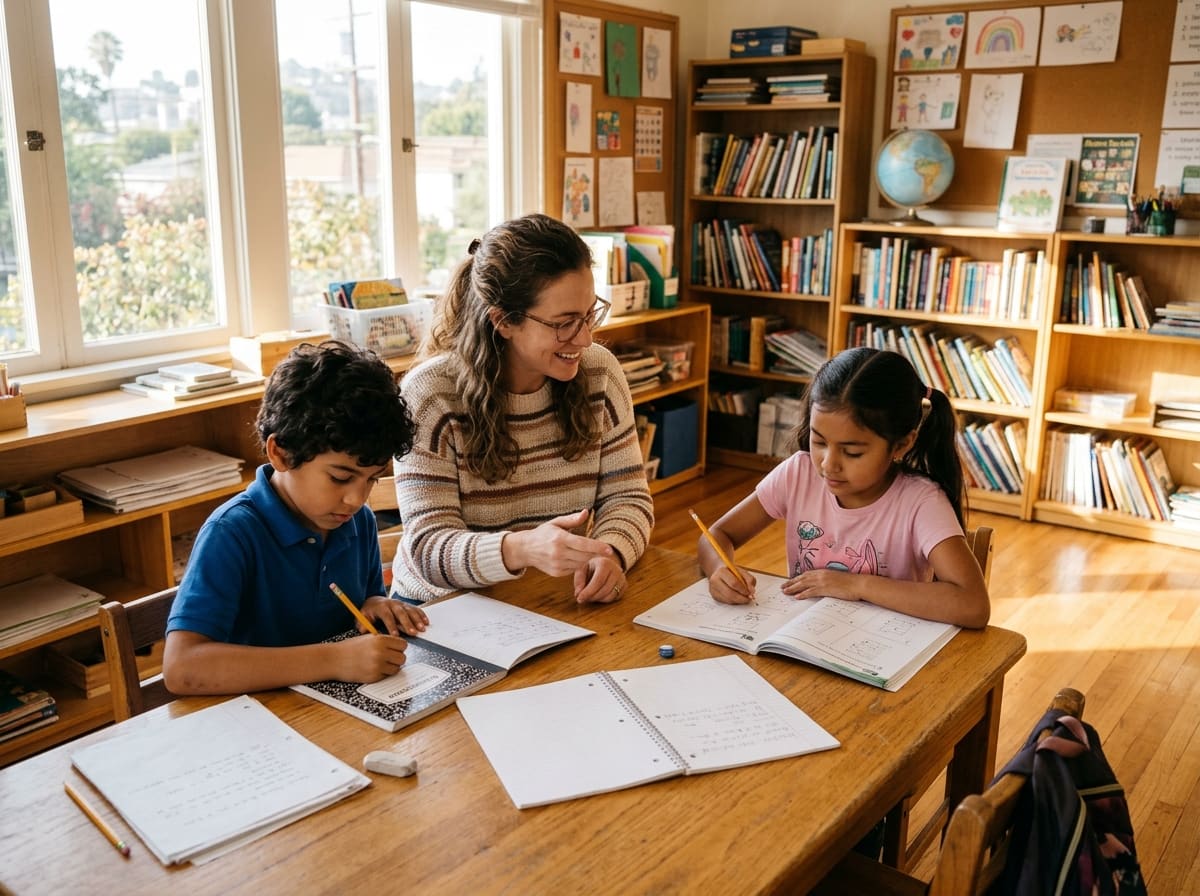
Many schools and teachers use the “10-minute rule,” which is supported by the National PTA and the National Education Association: about 10 minutes of homework per night for each grade level. That means roughly 10 minutes in 1st grade, 30 minutes in 3rd grade and about an hour by 6th grade. Kindergarten homework, if any, is usually short. Your child’s teacher sets the real amount, so treat this as a guide, not a rule. If homework regularly takes much longer, talk to the teacher. Do homework in the same quiet spot each day, with phones and tablets out of reach. Break longer tasks into short chunks with a quick stretch in between. Check the finished work together for a minute or two, without redoing it for them.
How Much Physical Activity Do Kids Need?
The U.S. Physical Activity Guidelines for Americans recommend that children and teens ages 6 to 17 get at least 60 minutes of moderate to vigorous physical activity every day. Younger children should be active throughout the day as well. Many kids do not reach that during school alone, especially on days without PE. After-school movement is also a reset for the brain. A short burst of running, dancing or a game of tag after homework can lift mood and help with sleep later. It does not need to be a formal sport every day. Adding an organized class two or three times a week, such as dance, taekwondo, fitness or football, gives children structure, friends and a goal to work toward.
How Can I Cut Down on Screen Time After School?
Screens are hardest to manage when they come first. Once a show or game starts, stopping it for homework turns into a fight. A simple fix is to make screens the last step of the afternoon, after food, homework and movement are done. The American Academy of Pediatrics encourages families to make a family media plan, with clear rules about when, where and how long screens are used. Keep devices out of bedrooms at night and turn them off well before bedtime. Offer easy alternatives that are always within reach: a box of books, a chess board, art supplies or a ball. Expect some pushback at first; it usually eases once the new routine feels normal.
What Should the Evening Look Like?
The goal of a good afternoon is a calm evening. If homework is finished and checked earlier in the day, the hours at home can go to dinner, reading, a bath and talking about the day. A steady bedtime matters for focus the next morning, and children ages 6 to 12 need 9 to 12 hours of sleep, per the American Academy of Sleep Medicine (endorsed by the American Academy of Pediatrics). For working parents, an after-school program can carry the afternoon part of this routine. At Grand Educational Center, 725 E Broadway in Glendale, children in Grades K–7 follow a set weekday flow from 1:30 PM, with homework and tutoring until 4:00 PM, when most classes begin. To see how it works, book a visit or call (747) 236-8888.