
How do I keep my child speaking Armenian when school is in English?
Once children start school, English fills most of their day. Their friends, teachers, shows and games are mostly in English, so Armenian can quietly shrink unless home makes room for it. You do not need perfect rules or perfect Armenian. You need regular, warm, everyday use. Start by deciding together, as a family, what you want: a child who understands, one who speaks, or one who also reads and writes. Eastern or Western Armenian, use whichever your family speaks naturally. What matters most is that your child hears Armenian often, from people they love, in moments that feel good. Children also go through phases. A child who pushes Armenian away at seven may come back to it proudly at twelve, especially if the door stayed open.
Way 1: Choose a simple family language rule
Families do this in different ways, and each can work. In some homes, one parent always speaks Armenian and the other English. In others, the rule is Armenian at home and English outside. Some families pick set times, such as Armenian at dinner, in the car and at bedtime. Choose the rule your family can actually keep on a tired weekday, then stick with it. Write it on a note on the fridge so babysitters and older siblings know it too. Tell grandparents, aunts and uncles about it, because they are often your strongest Armenian speakers. Consistency matters more than strictness. A rule that holds most days does far more than a perfect rule that falls apart within a week.
Way 2: What to do when your child answers in English
Almost every bilingual family meets this moment. You ask a question in Armenian and your child answers in English. Try not to scold or refuse to listen, because that can make Armenian feel like a test. Instead, keep the conversation going and repeat their idea back in Armenian, naturally: if your child says “I’m hungry,” answer in Armenian with the same words and offer a snack. Keep replying in Armenian yourself. Praise any Armenian your child uses, even one word in an English sentence. Small games help too, such as an “Armenian only” five minutes in the car where everyone earns a point for each Armenian sentence.
Ways 3 and 4: Build Armenian into daily routines
Language sticks when it is tied to real life. Read a short Armenian story at bedtime, or tell one from your own childhood. Sing Armenian songs in the car and play Armenian music while you cook. Cook a family recipe together and name every ingredient in Armenian. Set up regular video calls with grandparents or relatives in Armenia or elsewhere, and let your child show them a drawing or tell them about their week. Holidays, church, family gatherings and Armenian community events in Glendale give children a reason to use the language with people outside the house. Screen time can help too, when you watch an Armenian cartoon together and talk about it afterward.
Way 5: When should my child learn to read and write Armenian?
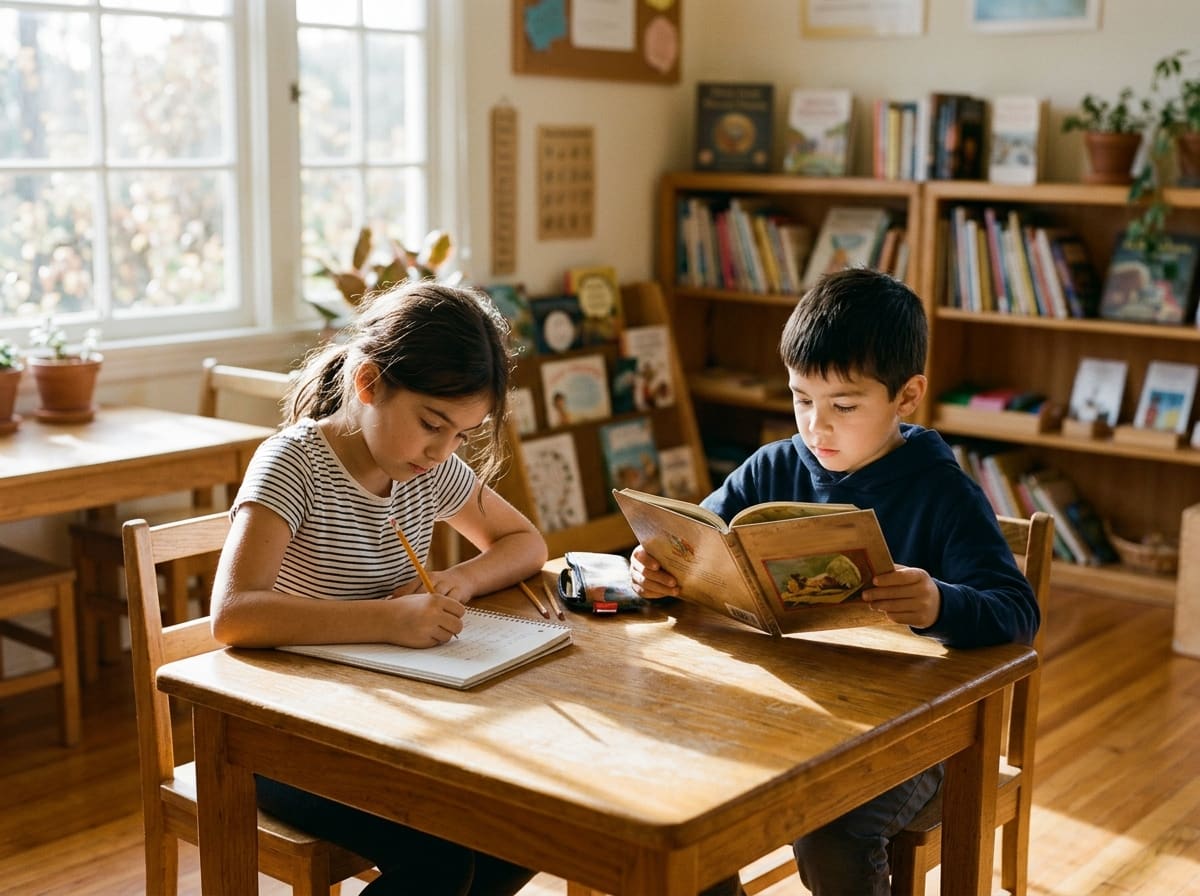
Speaking and understanding usually come first, but reading and writing make the language last. Many families start the 39-letter Armenian alphabet around the same time children begin reading English. Start small: the letters in your child’s name, then one new letter a week. Put Armenian labels on a few things at home, such as the door, the table and the fridge. Practice short, neat handwriting a few minutes at a time, and read simple books together, taking turns. Armenian letters have their own shapes and strokes, so a lined notebook and a model letter to copy make practice easier. Do not worry if English reading moves faster. Two alphabets take time, and steady, short practice works better than long lessons that feel like extra school.
Way 6: Get support outside the home
Children often work harder for a teacher than for a parent, and it helps them to see other kids learning Armenian too. At Grand Educational Center, our Armenian Language & Cultural Literacy program covers the 39-letter alphabet, reading, handwriting and everyday conversation for Grades K–7, from first letters for ages 5–7 to fluent reading and writing for ages 8–13. Beginners and children who already speak Armenian are both welcome. Learning alongside friends who share the same heritage can make Armenian feel like something your child owns, not just something parents ask for. For the current Armenian class schedule and availability, please call (747) 236-8888. You are also welcome to book a visit to our center at 725 E Broadway in Glendale.