
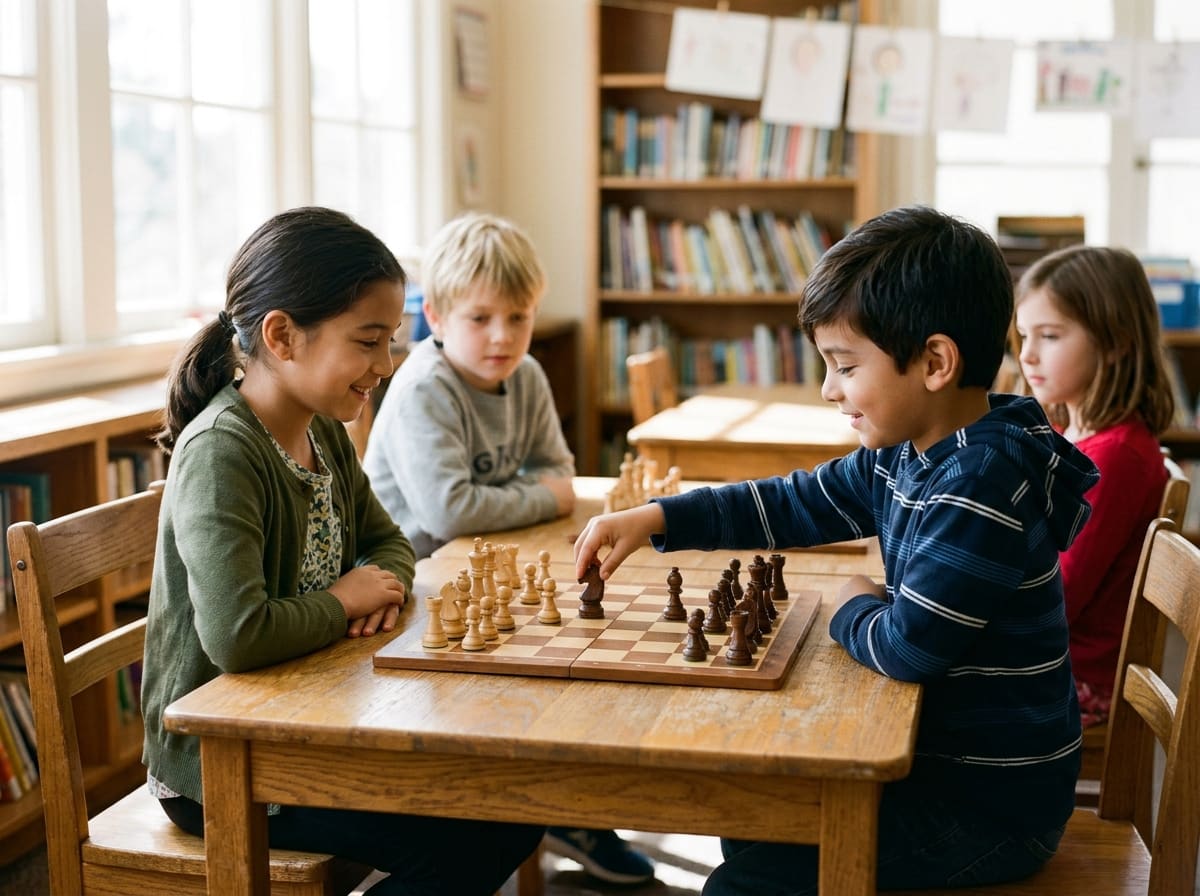
What Is the Right Age for a Child to Start Chess?
There is no single perfect age. Many chess teachers find that children are ready around 5 or 6, when they can sit for a short lesson, remember how each piece moves and wait for their turn calmly. Some 4-year-olds enjoy the pieces as toys, which is fine, but formal lessons usually work better a little later. Starting later is not a problem either. A child who begins at 9, 10 or even 12 often learns the rules in a few sessions, because they already read well, follow longer explanations and can think a step ahead. The goal is not to start as early as possible. It is to start when your child can enjoy it, so the game feels like play and not like another test.
How Can I Tell if My Child Is Ready for Chess Lessons?
A few simple signs help. Can your child sit with a board game or puzzle for 15 to 20 minutes? Do they like games with rules, such as cards or checkers? Can they lose a round without a big meltdown, at least most of the time? Are they curious about the pieces when they see a board? If the answer is mostly yes, a beginner class is a good next step. If not, try short games at home first: teach how one or two pieces move, play mini-games with only pawns, and stop while it is still fun. Readiness often arrives within a few months. Losing well is a skill too, and chess is one of the gentlest places to practice it.
What Does the First Year of Chess Lessons Look Like?
In a typical first year, children move through three stages. First come the basics: how each piece moves, check, checkmate, and simple ideas like controlling the center, bringing pieces out and keeping the king safe. Next come short tactics, such as forks and pins, and puzzles that ask a child to look two or three moves ahead. Finally, students learn simple endgames, like promoting a pawn, and play supervised practice games with classmates. At Grand Educational Center, the Chess & Strategic Mind Lab follows this same path: opening principles, then tactical puzzles and calculation, then endgames and practice matches. Progress is uneven, and that is normal. Many kids leap ahead for a month, then stall for a while as new ideas settle in.
Should Younger and Older Beginners Learn Together?
A 5-year-old and an 11-year-old learn chess very differently. Younger children need short explanations, lots of hands-on time with real pieces and small wins. Older beginners can handle longer puzzles, write down their moves and talk through why one plan is better than another. That is why levels by age help. At Grand Educational Center, the chess program runs from a beginner level for ages 5–7 to an intermediate level for ages 8–13 that prepares students for tournament-style play. An older child who is new to chess still starts with the basics; they simply tend to move through them faster. If you are not sure which level fits your child, ask during a visit.
How Can Parents Support Chess at Home?
You do not need to be a strong player to help. Set up a board somewhere visible and offer a short game a few times a week. Let your child teach you a rule they learned in class; explaining it back helps them remember it. A few puzzles before bed can replace a few minutes of screen time. Praise effort and good thinking more than wins. Saying “I liked how you checked if your queen was safe” teaches more than “You won!” After a lost game, look at one move together and ask what else they could have tried. Keep it light. Kids who feel pressure to win often stop wanting to play, and the habits chess builds, like patience and planning, come from playing often, not from playing perfectly.
Where Can Glendale Kids Learn Chess After School?
For many families, the hardest part is fitting chess into the week. At Grand Educational Center, 725 E Broadway in Glendale, the Chess & Strategic Mind Lab meets on Wednesdays from 3:00 to 4:00 PM in Room M and on Fridays from 3:30 to 4:30 PM in Room S, during the after-school day. Children in Grades K–7 (ages 5–13) can arrive after school, have lunch, work on homework and join chess, all in one place. Chess meets during the homework block, and the office helps fit homework around it. The center is open Monday through Friday from 1:00 PM to 10:00 PM. If you think your child might be ready, the easiest next step is to book a visit, see a class and ask which level fits. You can also call (747) 236-8888 with any questions.